Uncovering the Defunct Digital Distribution Game Services
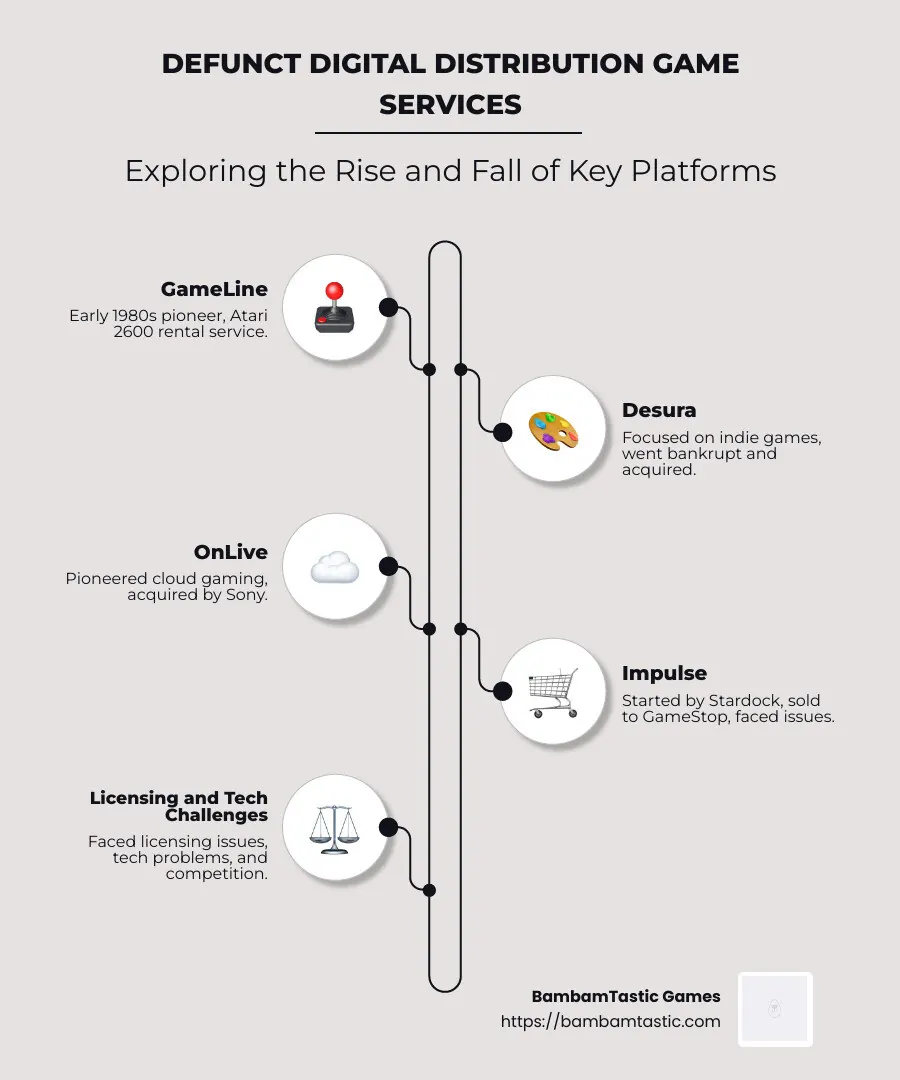
The defunct digital distribution game segment—where platforms once giving access to games are now no longer operational—is a fascinating part of gaming history. Network advancements in bandwidth during the early 2000s fueled the rise of digital distribution, changing how we purchase and play games. Despite the convenience and broad access they provided, some platforms did not stand the test of time and eventually shut down. Here’s a quick snapshot of those defunct digital distribution game services:
- GameLine: Early 1980s, pioneering Atari 2600 digital rental service.
- Desura: Known for indie games, went bankrupt and was later acquired.
- OnLive: Pioneered cloud gaming but was bought out by Sony.
- Impulse: Initially by Stardock, later sold to GameStop, faced integration issues.
If you want to dig deeper into each of these and understand their rise and fall, read on.
My name is Adam Degraide. With rich experience in digital marketing and game development, I’ve explored numerous defunct digital distribution game services and their impacts on the gaming industry. My journey allows me to offer clear insights into why these platforms emerged, thrived, and eventually declined.
Let’s explore their histories and the challenges they faced.
Learn more about defunct digital distribution game:
- best digital distribution for games
- digital game distribution market share
- does every pc game need a digital distribution platform
The Rise and Fall of Digital Distribution Platforms
Early Pioneers
In the early 1980s, GameLine emerged as one of the first digital distribution platforms. This service allowed Atari 2600 owners to download games via a telephone line, which was revolutionary for its time. Subscribers could access a library of games for a monthly fee, making it a pioneering step in digital game distribution. However, GameLine’s technology was ahead of its time, and it struggled to find a substantial user base, eventually fading out.
Dominant Platforms
As internet technology advanced, digital distribution platforms evolved significantly. The late 1990s and early 2000s saw the rise of digital storefronts and online gaming services. Companies like Stardock were early innovators, launching services like Stardock Central in 2001 to distribute their games digitally. This was followed by platforms such as TotalGaming.net and later, Impulse, which expanded to include third-party games.
The Decline of Physical Media
With the rise of digital distribution, the gaming industry saw a decline in physical game releases. Digital platforms offered several advantages over physical media:
- Convenience: Gamers could purchase and download games from the comfort of their homes.
- Instant Access: No need to wait for shipping or drive to a store.
- Online Patching: Games could be updated easily, fixing bugs and adding new content.
The convenience factor made digital distribution highly appealing, leading to a significant drop in physical game sales. For instance, in 2023, mobile gaming alone accounted for 77.7% of the total gaming industry revenue, highlighting the shift towards digital.
However, this shift also brought challenges. Some platforms, like Impulse, faced integration issues after being acquired by larger companies. The platform eventually became obsolete, illustrating the challenges of merging digital services with traditional retail operations.
The landscape of digital distribution continues to evolve, influenced by technological advancements and changing consumer preferences. While some platforms have thrived, others have become defunct, leaving behind a legacy that shaped the future of gaming.
Notable Defunct Digital Distribution Game Services
GameLine
In the early 1980s, GameLine was a groundbreaking service for Atari 2600 owners. It allowed users to download games via a telephone line, making it one of the first digital distribution platforms. Subscribers could access a library of games for a monthly fee, which was revolutionary at the time. However, GameLine’s technology was ahead of its time. It struggled to find a substantial user base and eventually faded out, leaving a legacy as a pioneering service in early digital distribution.
Desura
Desura was a digital distribution platform that focused on indie games. It provided a space for independent developers to publish their games, offering a unique alternative to more mainstream platforms. Unfortunately, Desura faced financial difficulties and declared bankruptcy in 2015. The platform failed to regain its footing, ultimately becoming another defunct digital distribution game service.
OnLive
OnLive was a cloud gaming and streaming service launched in 2010. It allowed users to stream games directly to their devices without needing powerful hardware. OnLive’s technology was impressive, but it faced significant challenges. The service struggled with latency issues and couldn’t compete with traditional gaming platforms. Despite its innovative approach, OnLive’s journey ended, highlighting the difficulties of early cloud gaming ventures.
Impulse
Originally developed by Stardock, Impulse was a digital distribution platform launched in 2008. It aimed to provide a comprehensive service for purchasing and managing PC games. Users faced numerous issues, from technical glitches to poor customer service, leading to a decline in user satisfaction. The platform eventually became obsolete, illustrating the challenges of merging digital services with traditional retail operations.
Challenges Faced by Defunct Platforms
Digital distribution platforms have faced numerous challenges over the years. These issues often led to their decline and eventual shutdown. Let’s explore some of the main challenges that caused these platforms to become defunct.
Licensing and Legal Issues
Licensing problems were a major hurdle for many digital distribution platforms. Licensing issues often arose from the complex agreements between game publishers and platform owners. These agreements dictated how games could be sold, distributed, and re-released.
Publisher rights were another sticking point. Publishers often wanted control over how their games were distributed and monetized. This could lead to conflicts with platform owners who had different business models or policies. For example, some platforms struggled to secure the necessary rights to re-release older games, leading to a loss of potential revenue.
Technological Problems
Technological limitations also played a significant role in the downfall of many platforms. Cloud gaming and streaming technology were particularly challenging. Early cloud gaming services like OnLive faced latency issues that made gameplay less enjoyable. These technological problems were often due to inadequate internet infrastructure, which couldn’t support the high data demands of streaming games.
Market Competition
Competition in the digital distribution market was fierce. Dominant platforms like Steam had a significant market share, making it difficult for new or smaller platforms to attract users. Consumer preferences also played a role. Many gamers preferred to stick with well-established platforms that offered vast libraries and reliable services.
This intense competition often led to the downfall of smaller or less well-known platforms. For example, Desura struggled to compete with larger platforms, ultimately leading to its bankruptcy and closure.
These challenges—licensing and legal issues, technological problems, and market competition—highlight the difficulties faced by defunct digital distribution game services. Understanding these obstacles helps us appreciate the complex landscape of digital game distribution.
Next, we’ll examine the impact of these challenges on game preservation and the efforts being made to preserve digital games.
The Impact on Game Preservation
The rise and fall of digital distribution platforms have significantly impacted game preservation. Let’s dig into the challenges of preserving digital games and the efforts being made to keep these titles accessible.
Lost Titles
One of the biggest issues with defunct digital distribution platforms is the loss of titles. When a platform shuts down, many games can disappear from the market. This is often due to licensing issues and the complex agreements between publishers and distributors. These agreements can create a licensing abyss, where games are trapped in legal limbo and cannot be re-released or redistributed.
For example, titles removed from platforms like OnLive and Impulse often became difficult or impossible to find. This has led to a market where some games are only available at exorbitant prices on auction portals, making them inaccessible to many gamers.
Efforts in Preservation
Despite these challenges, there are efforts to preserve digital games and make them accessible for future generations. One of the most notable platforms in this space is GOG.com. GOG specializes in bringing back old, forgotten games and making them compatible with modern systems. They offer DRM-free games, which means users can own and store their games without worrying about digital rights management restrictions.
GOG has been instrumental in resurrecting classic titles that were otherwise lost. For instance, they have brought back beloved games like Star Trek: Elite Force and Dungeons & Dragons classic RPGs. These efforts ensure that gamers can still enjoy these titles on modern hardware.
Another key player in game preservation is the Powerhouse Museum in Sydney. They focus on preserving digital games and presenting them to the public in innovative ways. For example, their showcase of the game Queer Man Peering Into A Rock Pool.jpg included interactive displays and digital archival materials, making the game accessible and engaging for visitors.
These efforts highlight the importance of preserving digital games and making them accessible for future generations. While the challenges are significant, platforms like GOG and institutions like the Powerhouse Museum are leading the way in game preservation.
Next, we’ll address some frequently asked questions about defunct digital distribution game services.
Frequently Asked Questions about Defunct Digital Distribution Game Services
Will my digital Switch games disappear?
No, your digital Switch games won’t just disappear. Nintendo ensures that games tied to your Nintendo Account can be redownloaded even if they are removed from the eShop. As long as you have purchased the game and it’s linked to your account, you can access it anytime. However, it’s always a good idea to download and back up your games to avoid any potential issues.
What was the first video game digital distribution?
The first significant example of video game digital distribution was GameLine in the early 1980s. This pioneering service allowed Atari 2600 owners to rent games over a phone line using a specialized cartridge. Although GameLine was short-lived, it laid the groundwork for future digital distribution services.
Conclusion
At BambamTastic Games, we understand the evolving landscape of digital game distribution. While many platforms have come and gone, our focus remains on delivering unique and engaging puzzle games centered around building and managing a restaurant empire.
Our games are designed to offer special upgrades that help players pass puzzles faster, making the gameplay experience both challenging and rewarding. We emphasize the importance of excellent service in our games, mirroring the real-world success factors of running a business.
When digital distribution is constantly changing, we are committed to providing a stable and enjoyable gaming experience. Whether you’re solving puzzles or strategizing to build your restaurant empire, our goal is to keep you engaged and entertained.
Explore our games on Google Play to find your next favorite game and see why BambamTastic Games stands out in the digital gaming world.